
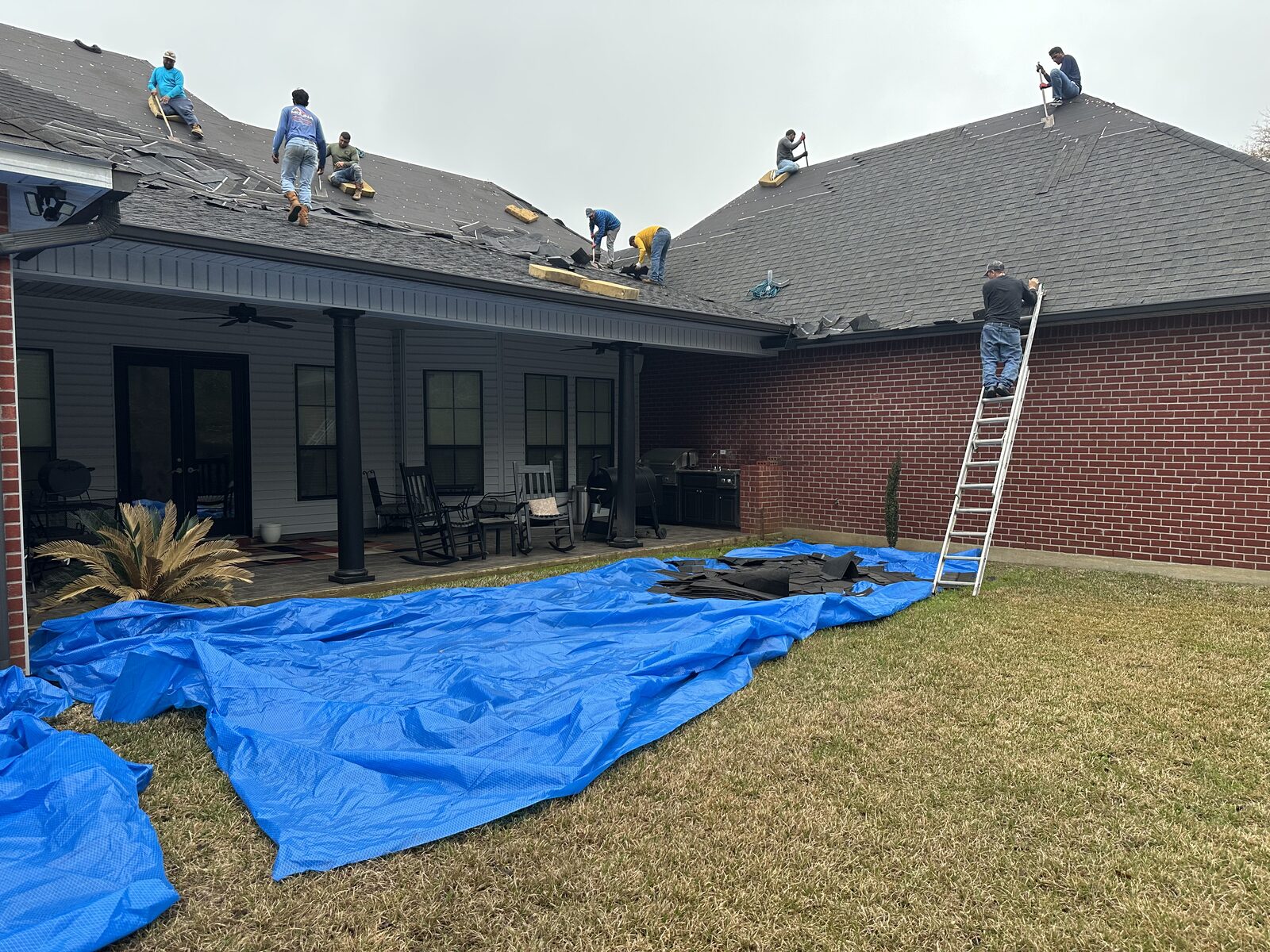
After a storm moves through Calcasieu, Beauregard, Vernon or Rapides parish, our phone gets busy with the same questions: Is my roof damaged? Should I file? What happens next? This guide walks through the process the way we see it work for our customers.
One note up front: we are roofers, not insurance agents or adjusters. We document damage and build the repair scope. What your policy covers and pays is between you and your carrier, so always read your policy and ask your agent about anything specific to it.
Step 1: Make it safe and stop the water
If water is coming in, stop it first. Move belongings, catch drips, and call for an emergency tarp. Most policies expect you to take reasonable steps to prevent more damage, so keep receipts for tarping and cleanup.
Do not climb on a wet or damaged roof yourself. Watch for downed power lines and hanging limbs.
Step 2: Photograph everything from the ground and inside
Take photos of the roof from the yard, fallen shingles or debris, damaged gutters, and any ceiling stains or wet insulation inside. Date-stamped photos taken right after the storm help connect the damage to a specific event.
Step 3: Get a documented inspection before you file
Damage is often invisible from the ground, and some roofs that look rough have no storm damage at all. A documented inspection tells you whether you have a claim before you open one. We photograph creased and lifted shingles, hail bruising, displaced ridge, bent panels and damaged flashing, and mark where each one is. If we do not find storm damage, we tell you.
Step 4: Contact your carrier and get a claim number
Report the claim, write down your claim number, and ask who your adjuster will be. Check your policy for reporting deadlines and for your deductible. Many Louisiana policies have a separate named-storm or hurricane deductible, often a percentage of your dwelling coverage, that is different from your all-perils deductible.
Step 5: Meet the adjuster on site
Be home for the adjuster inspection if you can. You can also have your roofer there. When we attend, we walk the roof with the adjuster and point out the damage we documented, so everyone is looking at the same thing.
Step 6: Review the scope line by line
The adjuster's estimate lists each item they are paying for. Compare it to your roofer's scope. Commonly missed items include drip edge, starter strip, pipe boots, ridge vent, valley metal, steep-pitch or two-story charges, and decking. If something was missed, your roofer can document it so you can ask the carrier to review it.
What to do if your roof claim is denied
A denial is not always the end of the road. Start with these steps:
- Ask for the denial in writing, with the policy language it is based on
- Get an independent, documented inspection if you have not had one
- Ask your carrier for a re-inspection, ideally with your roofer present
- Talk to your agent about the decision
- The Louisiana Department of Insurance has consumer resources and a complaint process
- For larger disputes, homeowners sometimes hire a licensed public adjuster or an attorney
Can I file a claim for a leaking roof?
It depends on why it is leaking. A leak caused by sudden wind or hail damage is usually the kind of thing homeowners policies are written for. A leak from an old, worn-out roof, a failed pipe boot from age, or a long-term slow leak usually is not. An inspection helps sort out which one you have.
Will a roof claim raise my insurance?
That depends on your carrier and your claim history, and only your agent can answer it for your policy. This is one more reason to get an inspection first, so you are not filing on a roof that has no storm damage.
Red flags after a storm
Out-of-town crews follow every major storm. Be careful with anyone who:
- Offers to waive or cover your deductible
- Pressures you to sign a contract before the adjuster has been out
- Has no local address and no Louisiana license number
- Asks for full payment before work starts
The bottom line
Start with a free documented inspection. You will know whether you have storm damage before you file, and you will have photos your adjuster can work from.
Call (337) 718-6407Related services
Roofing near you